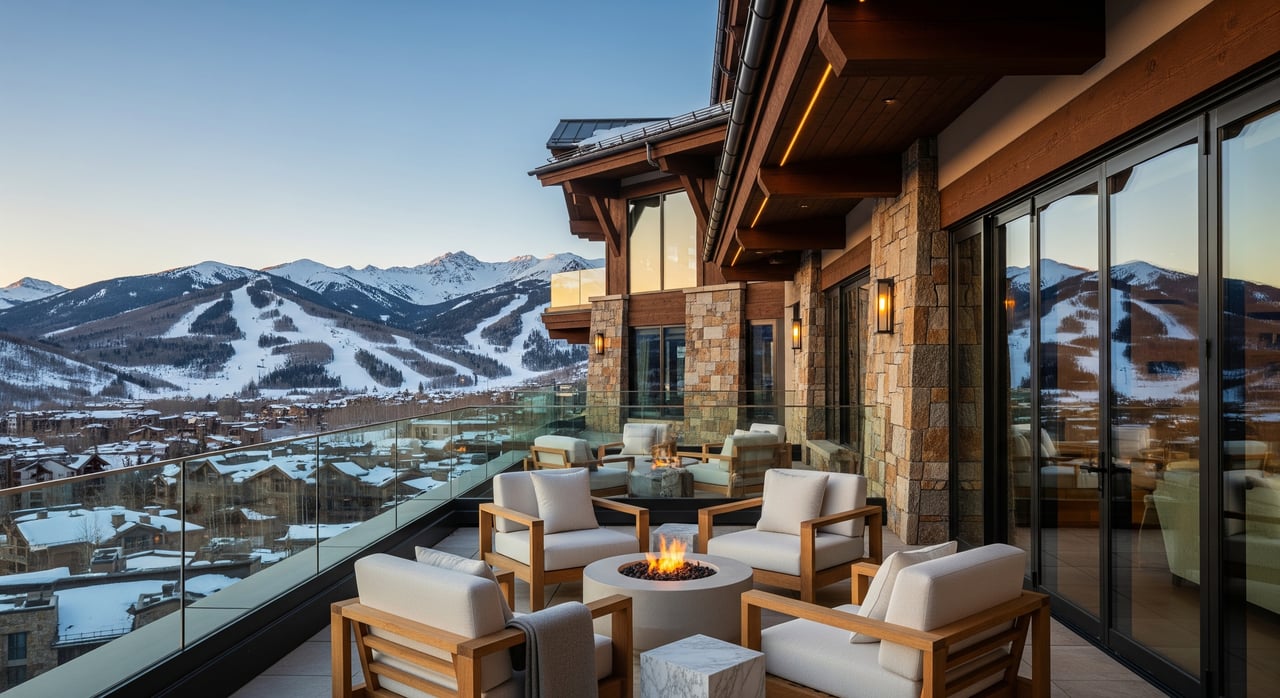
Are you eyeing a Vail luxury condo or condo-hotel but unsure how to finance it when the income is seasonal and the condo project has its own rules? You are not alone. Many buyers discover that agency loans do not fit resort properties, especially units tied to rental pools or short-term rentals. In this guide, you will learn how DSCR and portfolio loans work in Vail and Eagle County, what lenders evaluate, what documents to gather, and how to vet the right lending partners for a smooth close. Let’s dive in.
DSCR vs. portfolio loans in Vail
Debt-Service Coverage Ratio lending, or DSCR, focuses on the property’s ability to pay its own debt. Instead of qualifying you on personal income, the lender analyzes net operating income, then compares it to annual debt service. Many lenders look for a DSCR around 1.0 to 1.25, though the exact threshold varies by lender and property risk.
Portfolio loans are held by the lender instead of being sold to agencies. Because they keep the loan on their balance sheet, portfolio lenders set their own rules. That flexibility can be a strong fit for Vail resort condos and condo-hotels, where income is seasonal and condo project characteristics do not always align with agency standards.
Why these products fit resort condos
Resort properties often have income that swings between ski season, summer, and shoulder periods. Some units participate in rental pools or have management agreements that dictate revenue splits and owner use. DSCR and portfolio programs can underwrite this income reality, while agency products often restrict condo-hotels or projects with heavy short-term rental exposure. In Vail, a DSCR or portfolio structure lets the lender assess stabilized income and tailor terms to the project and unit.
What lenders focus on in Vail
Cash flow and DSCR math
Lenders review trailing revenue and expenses to determine sustainable net operating income. They may use a trailing 12 months, pro forma market rents, or a blend. Underwriting will typically apply a conservative vacancy and expense factor to normalize seasonality, then divide NOI by projected annual debt service to confirm the DSCR requirement.
Project and HOA health
Expect a close review of the condo association. Lenders look at budgets, reserves, insurance, special assessments, litigation, owner occupancy, and investor concentration. If the HOA has weak reserves or ongoing issues, some lenders reduce maximum loan-to-value or decline the loan.
Rental pool and STR compliance
For condo-hotel units, lenders examine the rental pool agreement, revenue split, management track record, and how income is reported to owners. They also want evidence that the unit complies with Town of Vail or Eagle County short-term rental rules and applicable tax registration, since regulation directly affects income.
Appraisal in resort markets
Appraisers with resort experience are preferred. Valuation often includes both comparable sales and an income approach based on stabilized NOI. A credible appraisal helps the lender reconcile seasonality with market-level demand drivers like ski access and event calendars.
Eligibility and typical terms
- Borrower types: U.S. citizens, resident aliens, and many non-resident foreign nationals are eligible, subject to program guidelines. Entities such as LLCs are often acceptable with additional documentation.
- Property types: Resort condos and condo-hotel units may be eligible with lender approval of the specific project. Projects with significant commercial components or very low owner occupancy are underwritten more conservatively.
- Terms and structures: Common offerings include 5 or 7 year ARMs, interest-only options, and 15 to 30 year amortization. Some portfolio products include shorter terms or balloons.
- LTV ranges: For resort condos and condo-hotels, expect more conservative leverage, often in the 50 to 75 percent range depending on the project, borrower profile, and risk factors.
- Pricing: Rates and fees are typically higher than conforming loans to reflect property type, seasonality, and balance sheet retention.
Foreign national financing essentials
Many portfolio and private lenders offer foreign national programs for resort purchases. Down payment expectations are often higher, commonly 30 to 50 percent, depending on lender, nationality, credit depth, and whether you buy individually or via an entity. Lenders may accept foreign tax returns, translated bank statements, or bank statement programs tied to DSCR.
Some programs require an ITIN or SSN. Expect verification of source of funds, higher reserves, notarized translations where needed, and a preference for funds moving through U.S. accounts for closing. If you plan to sell in the future, be aware of FIRPTA withholding and reporting requirements, which title and lenders will account for during a sale. Starting tax identification and banking steps early helps prevent closing delays.
Your documentation game plan
Gathering the right documents up front speeds underwriting and reduces risk of surprises. Create a property and borrower packet that includes:
- Trailing 12 to 24 months of management statements or P&Ls, showing gross rent, fees, owner disbursements, and net income
- Rental history and occupancy by month from the manager or booking platform
- HOA documents: CC&Rs, bylaws, current budget, reserve study, association bank statements, year-end financials, meeting minutes, insurance certificates, and any pending litigation disclosures
- Signed rental pool or management agreement, with owner usage provisions clearly outlined
- Appraisal by a resort-experienced appraiser, including income approach and comps for similar units
- Borrower items: passport and visa if applicable, ITIN or SSN, U.S. bank statements, source of funds for down payment, entity documents if using an LLC or corporation
- Tax items: U.S. returns if filed, or foreign returns and translated financials
- Evidence of short-term rental permits or registrations and lodging tax compliance if the unit is rented short term
- Proof of reserves as required, title commitment, and insurance confirmations
Clarify lender assumptions early
Be direct with lenders about how they will calculate income and risk. Ask them to spell out:
- NOI definition, including which operating expenses they deduct and whether they account for owner use days
- Vacancy and collection factors used to normalize seasonal revenue
- Capital expenditure and replacement reserve requirements
- Whether they accept pro forma income supported by market data or require historical results
- How they calculate debt service, including interest-only periods and stress tests on ARM resets
How to vet lender partners
The right lender match can save you time, money, and stress. Consider specialized investor lenders, regional Colorado portfolio banks or credit unions, national private lenders, and mortgage brokers with resort and foreign national experience. When interviewing, ask:
- Do you regularly close loans on Vail or Eagle County resort condos and condo-hotels?
- Will you finance condo-hotel units and properties with significant short-term rental income? What are the specific program limits?
- What DSCR methodology do you use, and what vacancy and expense factors do you apply?
- What are the max LTV, minimum DSCR, loan size limits, amortization options, and rate ranges today?
- What are your foreign national requirements, including down payment, ITIN acceptance, documentation, and reserves?
- How long do appraisal and underwriting typically take for resort properties?
- Are loans recourse, and what guarantees are required for entity borrowers?
- Can you provide references or recent resort closings?
Step-by-step path to a smooth close
- Build a preliminary property packet with HOA, management, P&Ls, rental history, and title basics.
- Obtain a DSCR-focused pre-qualification that shows the lender’s NOI assumptions and projected DSCR for the unit you want.
- Confirm the appraiser’s resort experience and the lender’s acceptance before you order the appraisal.
- Coordinate with title on foreign national requirements if applicable and confirm local short-term rental registration and tax compliance.
- Prepare funds verification, any required translations or notarizations, and align on closing logistics, including FIRPTA planning for future disposition if you are a foreign owner.
Red flags to avoid
- Vague DSCR math, especially if the lender will not share vacancy assumptions or excluded expenses
- Claims of condo-hotel acceptance without verifiable resort closings or references
- Unclear foreign national processes, including ITIN policies, source-of-funds verification, or FIRPTA coordination
Ready to explore financing paths in Vail?
If you want a clear, practical path through DSCR or portfolio lending for a Vail luxury condo or condo-hotel, it helps to work with an advisor who understands both the local income dynamics and cross-border financing nuances. I connect clients with vetted lender partners, prepare property packets that anticipate underwriting questions, and coordinate across management, HOA, title, and tax professionals so you can move with confidence. To discuss your goals and next steps, connect with Beatriz Martinez for a VIP consultation. WhatsApp available.
FAQs
What is a DSCR loan for Vail resort condos?
- A DSCR loan qualifies your purchase based on the property’s net operating income compared to the annual debt service, using a ratio that many lenders set around 1.0 to 1.25.
How much can I borrow with DSCR or portfolio loans in Eagle County?
- Expect more conservative leverage for resort assets, often 50 to 75 percent loan-to-value depending on the project, seasonality, HOA strength, and your profile.
Are condo-hotels in Vail eligible for financing?
- Many agency loans restrict condo-hotels, but portfolio and non-agency lenders often finance them with tighter limits, higher pricing, and a focus on rental pool and HOA health.
What down payment do foreign nationals typically need in Vail?
- Foreign national programs commonly require 30 to 50 percent down, along with added reserves, source-of-funds verification, and identification such as an ITIN or SSN.
What documents should I prepare before applying?
- Gather 12 to 24 months of rental statements, HOA budgets and reserves, insurance, management agreements, STR registration proof, borrower IDs and bank statements, and entity documents if using an LLC.
How do lenders treat owner use days in DSCR calculations?
- Policies vary, so confirm if the lender deducts owner use days from income or normalizes them when calculating NOI and the final DSCR.
How long does financing take for a Vail condo-hotel?
- Timelines vary by lender and appraiser availability, but expect added time for HOA review, appraisal with an income approach, and verification of rental and STR compliance.