Fresh tracks, hot cocoa, and a house full of happy guests — that is the Vail dream. But after a day on the mountain, wet gear, icy steps, and crowded bathrooms can turn the evening rush into a scramble. You want a retreat that feels effortless for friends and family, and that also holds up to Vail’s climate and rules.
In this guide, you will learn how to design your Vail or Eagle County home for smooth après-ski hosting. You will get practical specs for mudrooms, smart layouts that speed guest flow, guidance on fireplaces and hot tubs, and outdoor ideas that align with local codes. Let’s dive in.
Start with Vail’s realities
Vail’s alpine setting shapes good design. The resort area sees heavy winter weather, with the mountain reporting about 354 inches of annual snowfall, which drives durability choices and how you plan for snow and ice. You can confirm average snowfall on the mountain in the resort’s own mountain info pages, where the figure is reported as approximately 354 inches each year. See the resort’s overview for climate context in Vail’s mountain information.
Local structural rules matter too. The Town of Vail has adopted the 2024 I-Codes with amendments, including high design snow-load requirements that affect roof pitch, decks, and any exposed structures. Roof design typically includes snow guards and details to prevent snow shedding onto entries and walkways. Review the Town’s code details on design snow loads and roof rules early in planning.
Fire use is tightly regulated. The Town prohibits open burning and restricts outdoor wood fires. Gas-fired permanent outdoor appliances may be allowed under conditions, but some open-fire options are not permitted for short-term rentals. Check the Town’s current guidance on Vail fire restrictions before you promise a wood fire pit experience.
If you plan to rent nightly, short-term rentals require registration, a 24/7 local contact, and life-safety compliance. Rules can influence which amenities you install or advertise, including outdoor fire features and parking counts. Start with the Town’s page on short-term rental requirements and contacts.
Nail the arrival: a real mudroom
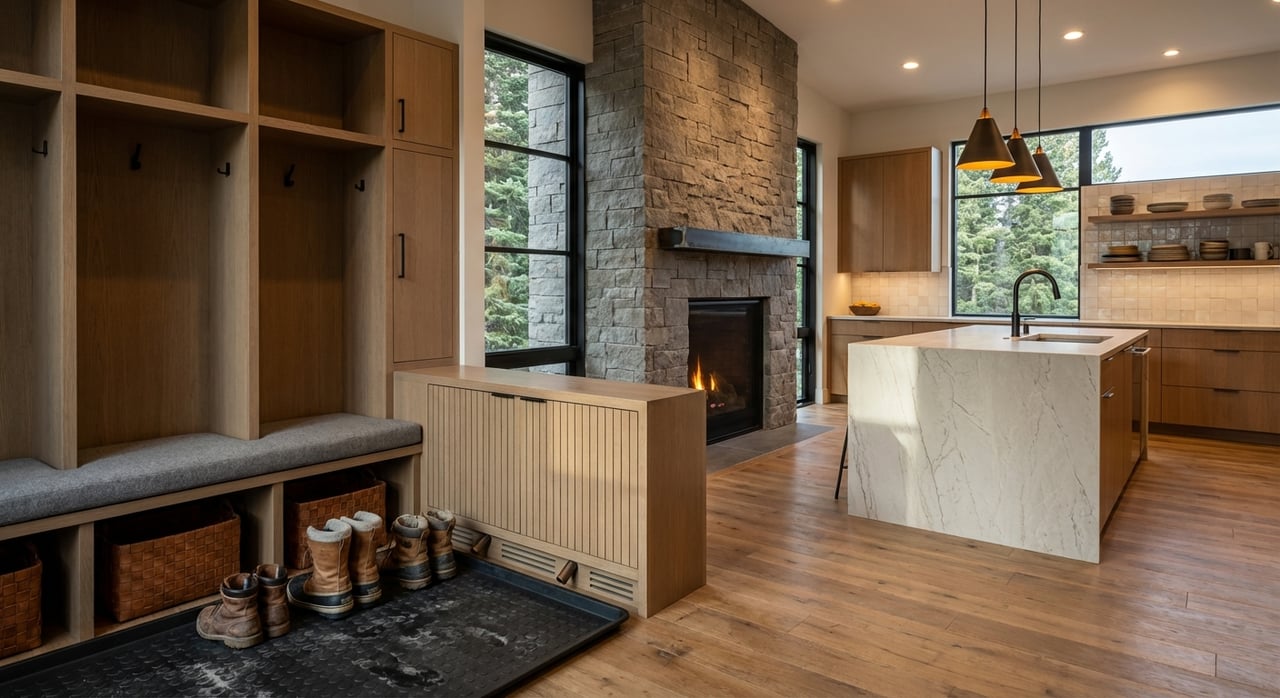
Your mudroom is your single most important après-ski feature. It is where wet, salty gear stops and warm, dry living begins. For guest comfort, scale the space to the way you host. Practical guidance suggests small entries around 36 square feet, while family or group hosting often calls for 50 to 100-plus square feet. A useful rule of thumb is about 24 to 30 inches of hanging or cubby width per person, with 12 to 18 inches of depth for boots and benches. See more sizing benchmarks in this mudroom planning guide.
Build in vertical ski and snowboard storage, helmet shelves, and a sturdy bench with storage below. Add a floor drain or a slight floor slope where practical. Choose non-slip, durable flooring like porcelain tile or sealed stone. Heated floors in the mudroom are a comfort upgrade that also speeds drying.
Plan for drying gear quickly and safely. Forced-air boot dryers or a drying cabinet make a big difference for back-to-back ski days. Commercial and residential wall or cabinet units are available, and you should reserve electrical capacity and clearances for them. Explore examples of forced-air drying solutions used in demanding environments in this overview of boot-drying equipment options.
Plan the flow guests feel
Map the route from arrival to gathering. A smart sequence is garage or main entry to mudroom or locker zone, then to laundry and a nearby powder or guest shower, and finally to the kitchen and living area. This keeps slush out of the core living zones and speeds turnover when a big group comes in at once.
Place laundry adjacent to the mudroom if space allows. After-ski stays mean lots of towels and base layers. Upgrading hot-water capacity is wise so several showers can run in a row without a cold surprise. For sleeping, versatility sells. Consider an easy-access en-suite and a bunk room that can flex for kids or extra guests.
Think comfort and ambience. Great rooms with tall ceilings and stone can echo. Soften sound with area rugs, upholstered seating, and lined draperies. Layer lighting with dimmable task, ambient, and accent fixtures so your space shifts from gear drop-off to cocktail hour with a tap.
Create the après heart: kitchen, living, hearth
Après-ski is social, so an open kitchen that looks into the living room works beautifully. A large island becomes the hot chocolate and appetizer hub while people rotate between the TV area and a quieter fireside conversation zone.
Fireplaces matter, and convenience rules when you host. Many owners prefer gas or direct-vent fireplaces for clean operation and lower particulate emissions, and because local rules restrict some wood-burning options. If you are considering a wood-burning feature, confirm certification and chimney details and be aware of maintenance needs. Always review current Vail fire restrictions and any HOA or building requirements before you decide.
Spa time: bathrooms, sauna, hot tub
Guests remember warm floors and great showers. In bathrooms, prioritize heated tile floors, generous walk-in or curbless showers, steam or rain heads, and towel warmers. Pair those features with strong ventilation and plenty of towel hooks and shelves. Radiant in-floor heat provides even comfort at lower air temperatures, which guests notice when stepping out of a shower. Research highlights these comfort advantages in a review of radiant heating performance.
Hot tubs are a signature après amenity in Vail, but install them the right way. Most units need a dedicated 240-volt circuit with GFCI protection and a properly located disconnect, and you should plan for permits and inspections. Familiarize yourself with relevant electrical requirements summarized in this review of NEC changes for spas and hot tubs. In our climate, invest in high-quality covers, insulation, and freeze protection. Also check HOA and any short-term rental limits before installation.
Outdoor living that fits Vail’s rules
Outdoor spaces extend the party, but design within local limits and wildfire context. Vail prohibits open burning and restricts portable wood fires, and some open-fire options are not allowed for short-term rentals. Gas-fueled built-in fireplaces or fire tables are the safer, code-aligned path. Confirm your plans against current Vail fire restrictions before you buy.
Landscaping should be beautiful and resilient. Hardscape near the home, choose plants thoughtfully, and maintain defensible space to reduce wildfire risk. Homeowners can tap local mitigation resources through programs like REALFire, which also supports long-term value.
Winter access is part of hosting. If your driveway is steep, consider snow-melt systems for primary walks, steps, and approaches. Electric mats are simpler to retrofit, while hydronic systems can be efficient for large areas. Learn the differences and practical tradeoffs in this overview of heated driveway systems.
Materials that take a beating
Choose finishes that resist grit, salt, and freeze-thaw cycles. In entries and kitchens, porcelain tile, sealed stone, or commercial-grade LVT are smart. For benches and lower wall areas, pick washable, abrasion-resistant surfaces. Outside, select decking and exterior details rated for freeze-thaw and water management, and work with your designer on roof and eave forms and snow guards that protect walkways.
Quiet systems that keep air fresh
Guests create moisture from wet gear and showers. Balanced ventilation with an HRV or ERV helps control humidity and deliver fresh air without big heating losses. In cold, dry mountain climates, your HVAC pro can help you choose between HRV or ERV based on whether you want to retain some indoor moisture. Pair ventilation with radiant floors in high-traffic wet zones like the mudroom and baths for a comfortable, dry home.
Resale signals buyers notice
In Vail’s resort market, buyers prize practical, low-maintenance comfort. A robust mudroom, open kitchen and living area anchored by a fireplace, spa-caliber baths, radiant heated floors, and a reliable hot tub are high on wish lists. Safety and ease also matter, from balanced ventilation to heated walkway sections on challenging sites. Outdoor gas fire features and wildfire-adapted landscaping can add appeal while staying inside local rules.
If you expect to rent nightly, design for STR compliance from the start. That includes life-safety features, clear guest parking plans, and avoiding amenities that are restricted for rentals. Confirm the latest requirements with the Town’s short-term rental information.
Your prioritized après-ski checklist
- Mudroom must-haves: bench, vertical ski and board storage, helmet shelves, a forced-air boot dryer or space for a drying cabinet, sloped tile or a floor drain, and non-slip flooring.
- Laundry and hot water: laundry near the mudroom, plus hot-water capacity that supports back-to-back showers.
- Social core: open kitchen with a generous island facing the hearth and multiple seating zones.
- Comfort systems: radiant heated floors in mudroom, kitchen, and baths, plus balanced ventilation for fresh air.
- Outdoor alignment: gas fire features, weather-sheltered seating, and wildfire-resilient landscaping that respects local rules.
- Access and safety: consider heated walkways or driveway sections if your site is steep or shaded.
Ready to tailor these ideas to your home and guest goals? Let’s talk about your location, HOA guidelines, and whether STR use is part of your plan. For concierge guidance and local expertise, connect with Beatriz Martinez to plan a Vail retreat your guests will love.
FAQs
What fire pit options are allowed for outdoor après-ski in Vail?
- The Town prohibits open burning and restricts portable wood fires, while gas-fired permanent outdoor appliances may be allowed with conditions. Always confirm current rules and any HOA limits.
How big should a mudroom be for ski guests?
- For groups, aim for 50 to 100-plus square feet and plan 24 to 30 inches of hanging or cubby width per person, plus 12 to 18 inches of depth for boots and benches.
Is a gas or wood fireplace better for a Vail rental property?
- Many owners choose gas or direct-vent units for clean operation and to align with local restrictions. If you want wood-burning, verify code requirements, chimney design, and maintenance.
Do I need permits or special electrical for a hot tub in Vail?
- Most hot tubs require a dedicated 240-volt GFCI-protected circuit and a properly located disconnect, along with permits and inspections. Check HOA and STR rules before installing.
Are heated driveways worth it for guest safety?
- On steep or shaded sites, snow-melt systems can reduce slips and simplify access. Electric systems are simpler to retrofit, while hydronic can be efficient for larger areas.
What should I consider if I want to short-term rent my Vail home?
- You will need STR registration, a 24/7 local contact, and life-safety compliance. Design amenities that align with rules, and avoid restricted outdoor fire features in rental listings.